The Historical Contributions of Female Artists: The Overlooked Artistic Legacy

Aug 28, 2025 By

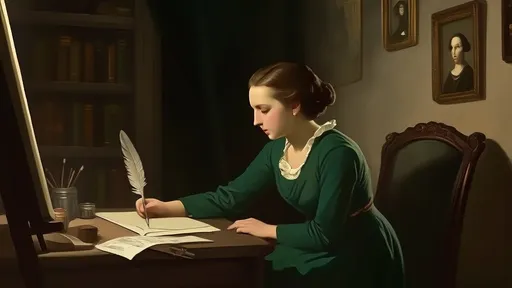
Throughout the annals of art history, the narrative has predominantly been shaped by the achievements of male artists, leaving the profound contributions of women largely obscured in the shadows. The legacy of female artists, though rich and transformative, has often been relegated to footnotes or entirely erased from mainstream discourse. This oversight not only distorts our understanding of artistic evolution but also perpetuates a cultural imbalance that undervalues the creative prowess of half the population. The story of women in art is not merely one of absence but of active suppression and systemic neglect, a gap that scholars and curators are only beginning to address with the seriousness it deserves.

In the Renaissance period, a time celebrated for its artistic flourishing, women faced formidable barriers to professional recognition. Despite these constraints, figures such as Artemisia Gentileschi emerged with powerful works that challenged contemporary norms. Her painting Judith Slaying Holofernes is a visceral depiction of female agency and strength, themes that were radical for their time. Yet, for centuries, her work was often attributed to her father or other male contemporaries, a common fate for many women artists whose identities were subsumed by patriarchal narratives. Similarly, Sofonisba Anguissola gained renown as a portraitist in the Spanish court, but her innovations in intimate, dynamic portraiture were frequently overshadowed by her male peers like Titian or Van Dyck.

The Baroque and Rococo eras saw further contributions from women, though again, their recognition was circumscribed by societal expectations. Elisabeth Louise Vigée Le Brun became one of the few women admitted to the French Royal Academy, yet her success was often framed through her role as a court painter rather than as an independent artistic force. Her technically masterful and psychologically nuanced portraits, such as those of Marie Antoinette, displayed a sophistication that rivaled any male counterpart, but historical accounts minimized her influence, focusing instead on her gender and personal life. This pattern of gendered criticism—where women’s art was evaluated through the lens of femininity rather than merit—persisted well into the modern era.

The 19th century witnessed a slight shift as movements like Impressionism began to challenge traditional academies. Berthe Morisot and Mary Cassatt were integral to the development of Impressionism, contributing works that captured the nuances of domestic life and female subjectivity with unprecedented sensitivity. Morisot’s loose brushwork and exploration of light were on par with Monet’s, yet her exhibitions were often reviewed with condescension, critics emphasizing her "feminine touch" rather than her technical innovations. Cassatt, though better recognized in her lifetime, was frequently pigeonholed as a painter of mothers and children, a categorization that limited the perception of her broader artistic ambitions. Their male colleagues, by contrast, were celebrated for their revolutionary break from tradition, a dichotomy that highlights the biased frameworks of art criticism.

Moving into the early 20th century, female artists played pivotal roles in avant-garde movements, though their participation was routinely marginalized. Hilma af Klint created abstract paintings years before Kandinsky or Malevich, yet her groundbreaking work was largely unknown until decades after her death, suppressed by a art world unwilling to acknowledge a woman as a pioneer of abstraction. Similarly, Dora Maar was long remembered merely as Picasso’s muse rather than as a formidable Surrealist photographer and painter in her own right. Her photographic experiments and political engagements were critical to the cultural milieu of the time, but her legacy was overshadowed by the mythologizing of male genius.

The mid-20th century brought new forms of exclusion, particularly in the male-dominated spheres of Abstract Expressionism and Minimalism. Lee Krasner, despite her significant innovations, was often dismissed as Jackson Pollock’s wife, her dynamic compositions and energetic style receiving scant attention compared to her husband’s. It was only later in life that she gained belated recognition, a testament to the persistent barriers women faced in achieving timely acclaim. Likewise, Agnes Martin’s serene, grid-based paintings were sometimes misinterpreted through a gendered lens, critics attributing their subtlety to a "feminine sensibility" rather than engaging with their philosophical depth and rigorous formal discipline.

The feminist art movement of the 1960s and 1970s marked a turning point, with artists like Judy Chicago and Miriam Schapiro explicitly addressing the erasure of women from art history. Chicago’s The Dinner Party became an iconic work, reclaiming the narratives of historical and mythical women through monumental installation. This period also saw the rise of collectives such as the Guerrilla Girls, who used data and wit to expose the sexism and racism of the art establishment. Their activism forced institutions to confront their biases, leading to incremental increases in the representation of women in galleries and museums. However, this progress was hard-won and remains incomplete, as the canon continues to prioritize male narratives.

In contemporary times, the contributions of female artists are gradually being reassessed, though challenges persist. The market still undervalues work by women, with auction prices and major retrospectives disproportionately favoring men. Artists like Yayoi Kusama or Kara Walker have achieved international acclaim, yet their success is often framed as exceptional rather than indicative of systemic change. Kusama’s immersive installations and Walker’s provocative silhouettes engage with themes of identity, trauma, and history, expanding the boundaries of what art can address. Their visibility, however, does not erase the ongoing struggles of countless women whose work remains overlooked due to race, class, or geographic location.

The digital age offers new opportunities for redress, with online archives and social media platforms enabling broader access to neglected works. Initiatives like the Wikipedia Edit-a-Thons focused on women artists aim to correct informational gaps, while databases such as the National Museum of Women in the Arts provide resources for researchers and enthusiasts. These efforts are crucial, but they must be supported by institutional commitments—acquisitions, exhibitions, and scholarly research—that fully integrate women into the historical narrative. Without this, the risk of tokenism remains, where a few celebrated figures are used to veil deeper inequities.

Reckoning with the neglected legacy of female artists is not about rewriting history but expanding it to reflect a more truthful and inclusive story. Their contributions have shaped artistic movements, challenged aesthetic conventions, and enriched our cultural heritage in innumerable ways. As we continue to uncover and celebrate these voices, we move closer to an art history that honors creativity in all its forms, regardless of gender. The journey toward equity is ongoing, but each rediscovered artist, each restaged exhibition, and each revised curriculum brings us closer to a future where the term "artist" is truly gender-neutral.
Recommend Posts
Arts

Operation of Private Art Museums: From Collection to Exhibition"

By /Aug 28, 2025

The world of private art museums represents a fascinating intersection of personal passion, cultural stewardship, and complex operational management. Unlike their public counterparts, these institutions are born from individual or familial vision, often starting as a private collection that outgrows its domestic confines. The journey from a personal passion project to a publicly accessible institution is a nuanced process, filled with both artistic idealism and pragmatic challenges.
Arts

The Globalization of the Art Market: Trends and Challenges in Cross-Cultural Transactions

By /Aug 28, 2025

The art world has undergone a seismic shift over the past quarter-century, evolving from a collection of loosely connected regional markets into a truly globalized ecosystem. This transformation has been driven by technological advancements, economic liberalization, and a growing cultural appetite for cross-border artistic exchange. The phenomenon of art market globalization represents not merely a change in scale but a fundamental reordering of how art is created, valued, traded, and understood across diverse cultural contexts.
Arts

Strategies for Art Auctions: Bidding Techniques and Psychological Tactics"

By /Aug 28, 2025

In the hushed auction rooms where fortunes change hands with the subtle nod of a head, the art of bidding transcends mere financial transaction. It is a sophisticated dance of strategy, psychology, and perception, a high-stakes game played on a global stage. For collectors, investors, and enthusiasts alike, understanding the nuanced mechanics behind a successful bid is as crucial as appreciating the art itself. The journey from spectator to victorious bidder is paved with more than just deep pockets; it requires meticulous preparation, acute situational awareness, and a masterful command of one's own impulses.
Arts

Investment Models of Art Funds: Pros and Cons of Group Collections"

By /Aug 28, 2025

In the intricate ecosystem of art investment, the model of art funds structured around group collections has emerged as a compelling, albeit complex, avenue for both financial and cultural capital. This approach, which pools resources from multiple investors to acquire and manage a portfolio of artworks, presents a unique set of dynamics that distinguish it from individual collecting or other forms of art investment. The very structure of these funds, often managed by seasoned art professionals, aims to democratize access to high-value art markets that are traditionally the domain of the ultra-wealthy. By aggregating capital, these entities can compete for blue-chip works, diversify holdings across genres and periods, and leverage professional expertise to navigate the often-opaque art world.
Arts

Tax Planning for Art Donations: Balancing Philanthropy and Benefits

By /Aug 28, 2025

In the intricate world of art philanthropy, the confluence of altruism and financial strategy creates a compelling narrative for collectors and institutions alike. The act of donating art transcends mere generosity; it embodies a sophisticated dance between charitable intent and astute tax planning. For high-net-worth individuals, galleries, and estates, understanding the nuanced interplay between these elements is not just beneficial—it is essential for maximizing both philanthropic impact and financial returns.
Arts

Artwork Insurance and Storage: Methods for Protecting Valuable Collections"

By /Aug 28, 2025

In the intricate world of art collection, the dual responsibilities of insurance and custodianship form the bedrock of preserving cultural and financial value. For collectors, galleries, and institutions, navigating this landscape requires a nuanced understanding of risk, protection methodologies, and the evolving nature of threats to artistic works. The conversation extends beyond mere contractual agreements or storage solutions; it delves into the philosophy of safeguarding heritage for future generations while addressing the practicalities of the present.
Arts

A Guide to Visiting Art Fairs: How to Efficiently Explore Exhibitions

By /Aug 28, 2025

Stepping into an art fair can feel both exhilarating and overwhelming. The sheer scale of contemporary creativity on display, the bustling crowds, and the labyrinthine layout of booths can easily turn what should be an inspiring visit into a fatiguing blur. To truly absorb the art and make the most of your time, a strategic approach is not just helpful—it’s essential. This guide is designed to transform your next art fair experience from a frantic sprint into a curated journey of discovery.
Arts

Online Art Trading Platform: A New Way of Collecting in the Digital Age

By /Aug 28, 2025

The art world is undergoing a profound transformation, one that is reshaping how collectors, artists, and enthusiasts interact with the timeless allure of creativity. At the heart of this change lies the rise of online art trading platforms, a digital evolution that has turned the traditionally exclusive and often intimidating art market into a more accessible, transparent, and dynamic global marketplace. This shift is not merely a trend but a fundamental reimagining of art collection in the digital age.
Arts

Risk Assessment in Art Investment: How to Choose Value-Preserving Artworks

By /Aug 28, 2025

In the intricate world of art investment, the allure of aesthetic pleasure often intertwines with the promise of financial gain. Yet, beneath the surface of glamorous auction houses and prestigious galleries lies a landscape fraught with volatility and uncertainty. Unlike traditional assets such as stocks or bonds, art does not generate dividends or interest; its value is inherently subjective, shaped by cultural trends, critical acclaim, and the whims of collectors. This very subjectivity makes art investment a high-stakes endeavor, where a masterpiece can appreciate exponentially or languish in obscurity. To navigate this terrain successfully, investors must adopt a disciplined approach, blending connoisseurship with rigorous risk assessment. The key lies not in chasing fleeting trends but in identifying works that possess enduring cultural and historical significance—those rare pieces that transcend time and taste.
Arts

Market Strategies for Young Artists: From Studio to Gallery"

By /Aug 28, 2025

In the vibrant ecosystem of contemporary art, emerging artists navigate a complex journey from the solitude of their studios to the public eye of gallery exhibitions. This path, often uncharted and intimidating, demands not only creative excellence but also strategic acumen. The transition from creating art to marketing it effectively is a critical phase that can define an artist's career trajectory. Understanding the nuances of this process is essential for any young creator aiming to establish a sustainable presence in the competitive art market.
Arts

The Quest for Modernist Form: Pursuit of Simplification and Purity in Aesthetics"

By /Aug 28, 2025

In the vast tapestry of art history, few movements have pursued the essence of form with the fervor and intellectual rigor of Modernism. Emerging in the late 19th and early 20th centuries, this was not merely a stylistic shift but a profound philosophical reorientation. Artists, architects, and designers embarked on a collective journey to strip away the ornamental excesses of the past, which they saw as dishonest and burdened by historical weight. They sought to uncover a new visual language, one that was authentic to the modern age—an era defined by industrialization, technological advancement, and a rapidly changing social order. This was a quest for truth in materials, structure, and function, a belief that by reducing form to its most fundamental elements, one could achieve a higher, more universal and pure aesthetic experience.
Arts

The Conceptual Turn in Contemporary Art: From Visual to Intellectual Art

By /Aug 28, 2025

In the ever-evolving landscape of contemporary art, a profound shift has been quietly unfolding—one that moves beyond the purely visual to engage deeply with conceptual and intellectual dimensions. This transition, often described as the conceptual turn, marks a significant departure from traditional aesthetics and challenges viewers to rethink what constitutes art itself. No longer confined to mere representation or sensory appeal, art now increasingly operates as a medium for ideas, critiques, and philosophical inquiries.
Arts

The Historical Contributions of Female Artists: The Overlooked Artistic Legacy

By /Aug 28, 2025

Throughout the annals of art history, the narrative has predominantly been shaped by the achievements of male artists, leaving the profound contributions of women largely obscured in the shadows. The legacy of female artists, though rich and transformative, has often been relegated to footnotes or entirely erased from mainstream discourse. This oversight not only distorts our understanding of artistic evolution but also perpetuates a cultural imbalance that undervalues the creative prowess of half the population. The story of women in art is not merely one of absence but of active suppression and systemic neglect, a gap that scholars and curators are only beginning to address with the seriousness it deserves.
Arts

The Symbolic Significance of African Masks: Traditional Culture and Modern Interpretation"

By /Aug 28, 2025

In the dimly lit halls of museums and private collections worldwide, African masks silently command attention. These are not mere artifacts; they are frozen moments of spiritual dialogue, carved from wood and imbued with the breath of ancestors. To the uninitiated eye, they might appear as exotic curiosities, but within their grooves and pigments lies a complex language of symbolism, a visual theology that has guided communities for centuries. The story of African masks is one of deep cultural resonance, a narrative that stretches from sacred forest groves to the white-walled galleries of contemporary art, continually challenging and expanding our understanding of art, ritual, and identity.
Arts

The Global Impact of Japanese Ukiyo-e: The Western Dissemination of Eastern Aesthetics"

By /Aug 28, 2025

In the grand tapestry of global art history, few movements have woven as intricate and far-reaching a thread as Japanese ukiyo-e. The woodblock prints that emerged during the Edo period did not merely capture the fleeting beauty of the floating world; they embarked on a transcontinental journey that would irrevocably alter the course of Western art. The story of ukiyo-e's world influence is not one of simple appropriation, but a profound dialogue between East and West, a silent revolution sparked by paper and ink.
Arts

The Spiritual Connotations of Chinese Literati Painting: Philosophical Reflections Beyond the Brush and Ink"

By /Aug 28, 2025

In the hushed halls of Western museums, Chinese literati painting often occupies a quiet corner, its subtle monochromes and seemingly simplistic compositions easily overshadowed by the vibrant dramas of European oil paintings. To the untrained eye, these works might appear as mere historical artifacts or skilled exercises in brushwork. However, to dismiss them as such is to miss the profound universe contained within their ink-washed boundaries. These are not merely pictures; they are philosophical arguments rendered in ink, silent poems whispered on paper, and the most intimate portals into the soul of a millennia-old civilization.
Arts

The Commercial Aesthetics of Pop Art: The Artistic Sublimation of Mass Culture

By /Aug 28, 2025

In the swirling vortex of post-war consumerism, a revolutionary art movement emerged, not from the hallowed halls of traditional academies, but from the vibrant, brash, and often overlooked landscape of popular culture. Pop Art did not merely observe this new world; it plunged headlong into its very heart, holding up a mirror—sometimes critical, sometimes celebratory, but always captivating—to the commercial imagery that had begun to define modern existence. Its genius lay in its ability to transmute the ordinary, the mass-produced, and the ostensibly superficial into profound artistic statements, thereby forging a new aesthetic deeply intertwined with commerce.
Arts

Emotional Expression in Abstract Expressionism: A Dialogue Between Paint and Soul"

By /Aug 28, 2025

In the dimly lit galleries of mid-20th century New York, a revolution was quietly unfolding on canvas. Abstract Expressionism emerged not merely as an art movement, but as a profound psychological and philosophical statement—a raw, unfiltered conversation between pigment and psyche that forever altered our understanding of artistic expression. The canvas became an arena where emotion, rather than representation, took precedence, where the very act of painting transformed into a performance of inner turmoil and ecstasy.
Arts

The Impressionist Revolution of Light and Color: Artistic Breakthroughs in Plein Air Painting

By /Aug 28, 2025

The soft morning mist hangs over the haystacks as the first rays of sunlight begin to pierce through, casting ever-changing hues of gold and violet across the countryside. This transient moment, this fleeting dance of light and color, became the very essence of what we now celebrate as Impressionism—a movement that forever altered the course of art history. The revolution did not begin in grand studios with controlled lighting and meticulous setups, but rather in the open air, where artists embraced the unpredictable, the momentary, and the vibrantly real.
Arts

Renaissance Painting Techniques: Secrets of the Masters"

By /Aug 28, 2025

In the grand tapestry of art history, the Renaissance stands as a luminous epoch where painting transcended mere craft to become a profound language of human experience. The techniques developed during this period, from the early 14th to the late 16th century, were not merely technical advancements but represented a seismic shift in how artists perceived and represented the world around them. These methods, often guarded as trade secrets within workshops, enabled the creation of works that continue to captivate audiences centuries later with their depth, realism, and emotional resonance.