In the ever-evolving landscape of contemporary art, a profound shift has been quietly unfolding—one that moves beyond the purely visual to engage deeply with conceptual and intellectual dimensions. This transition, often described as the conceptual turn, marks a significant departure from traditional aesthetics and challenges viewers to rethink what constitutes art itself. No longer confined to mere representation or sensory appeal, art now increasingly operates as a medium for ideas, critiques, and philosophical inquiries.
The roots of this transformation can be traced back to the mid-20th century, when artists began to question the primacy of the visual and the object-based nature of art. Movements such as Conceptual Art, Minimalism, and Fluxus paved the way by emphasizing ideas over form, process over product, and context over content. Artists like Marcel Duchamp, with his readymades, and later figures such as Joseph Kosuth and Sol LeWitt, argued that the concept behind a work held greater importance than its physical execution. This ideological groundwork has since permeated various disciplines, from installation and performance to digital and participatory art, fostering a rich environment where thought-provoking creations thrive.
Today, this conceptual orientation is more pronounced than ever, reflecting broader cultural, technological, and social shifts. In an age saturated with images and information, artists are leveraging their practices to address complex issues such as identity, globalization, ecology, and the digital self. Works often serve as critical commentaries or open-ended questions, inviting audiences to participate in meaning-making rather than passively consume beauty. For instance, immersive installations might explore the nuances of memory, while data-driven projects visualize invisible systems like algorithms or climate change, pushing boundaries between art, science, and philosophy.
This emphasis on ideas does not negate the visual entirely; rather, it recontextualizes it. Visual elements become vehicles for deeper narratives, where symbolism, metaphor, and abstraction convey layered messages. Artists might employ mundane materials or repurpose everyday objects to challenge perceptions of value and function, as seen in the works of Ai Weiwei or Kara Walker. The aesthetic experience thus evolves into an intellectual encounter, where understanding and interpretation are as crucial as emotional response.
Moreover, the role of the audience has transformed significantly in this conceptual framework. Viewers are no longer mere spectators but active participants whose engagement completes the artwork. Interactive pieces, social practice projects, and relational aesthetics depend on communal involvement, blurring lines between creator and consumer. This democratization of art aligns with contemporary desires for agency and dialogue in a interconnected world, making art a collaborative space for exchange and reflection.
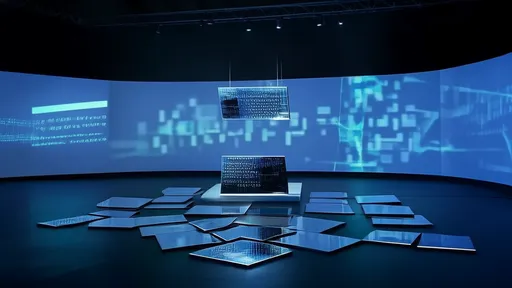
Technology has further accelerated this shift, providing new tools for conceptual exploration. Digital art, virtual reality, and AI-generated works enable artists to manipulate perception and reality, often questioning the very nature of human experience. For example, works by teamLab or Refik Anadol use technology not as an end in itself but as a means to probe consciousness, time, and space. These innovations expand the possibilities for artistic expression while reinforcing the primacy of idea over medium.
However, this conceptual turn is not without its critics. Some argue that an overemphasis on theory can alienate audiences, creating art that feels inaccessible or elitist. Others worry that the devaluation of technical skill might lead to a decline in craftsmanship. Yet, proponents counter that conceptual art democratizes creativity by prioritizing thought and inclusivity, allowing diverse voices and non-traditional practices to enter the canon. It challenges institutional norms and expands what art can be and do in society.
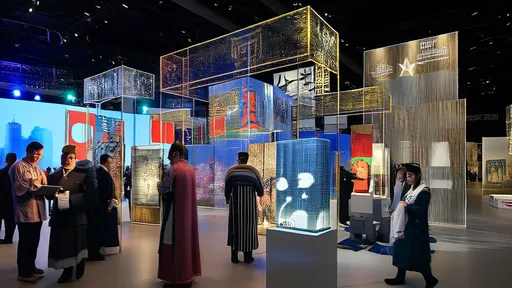
In educational and institutional contexts, this evolution is reflected in curricula and exhibitions that stress critical thinking, research, and interdisciplinary approaches. Museums and galleries increasingly showcase works that demand contextual knowledge and prolonged engagement, curating experiences that are as informative as they are inspirational. This aligns with a broader cultural move towards knowledge-based economies and lifelong learning, where art becomes a site for intellectual adventure.
Looking ahead, the conceptual trajectory of contemporary art shows no signs of waning. As global challenges grow more complex, artists will likely continue to use their platforms to interrogate, imagine, and inspire change. The fusion of art with fields like neuroscience, ecology, and activism suggests a future where creative practice is deeply integrated with societal progress. This ongoing dialogue between vision and thought ensures that art remains a vital force for understanding and transforming the world.
In conclusion, the movement from visual to conceptual art represents a maturation of the medium—one that embraces complexity, encourages critical engagement, and reflects the multifaceted nature of modern life. By prioritizing ideas, contemporary art not only expands its own boundaries but also enriches our collective capacity for reflection and innovation.
By /Aug 28, 2025
By /Aug 28, 2025

By /Aug 28, 2025
By /Aug 28, 2025
By /Aug 28, 2025
By /Aug 28, 2025
By /Aug 28, 2025
By /Aug 28, 2025
By /Aug 28, 2025
By /Aug 28, 2025
By /Aug 28, 2025
By /Aug 28, 2025
By /Aug 28, 2025
By /Aug 28, 2025

By /Aug 28, 2025

By /Aug 28, 2025
By /Aug 28, 2025
By /Aug 28, 2025
By /Aug 28, 2025

By /Aug 28, 2025