In the high-stakes arena of corporate leadership, the decision-making patterns of executives are not merely a matter of strategy but a complex interplay of psychology, environment, and pressure. The concept of a 'Decision-Making Astrolabe Pressure Test' has emerged as a sophisticated framework to map, analyze, and stress-test these patterns. Unlike traditional models that often view decisions in isolation, this approach constructs a holistic 'star chart' of an executive's cognitive and behavioral tendencies, plotting them against a backdrop of simulated crises and extreme scenarios. It is a diagnostic tool designed not to predict the future, but to reveal the fault lines and resilience within a leader's mental framework when confronted with the unimaginable.
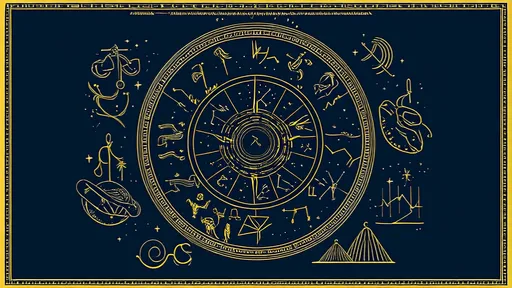
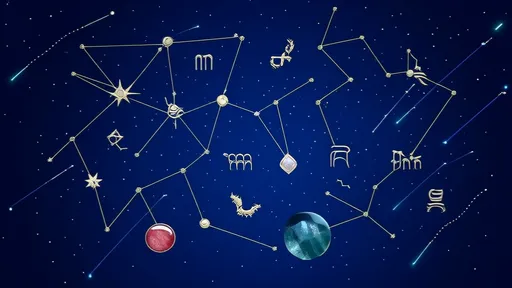
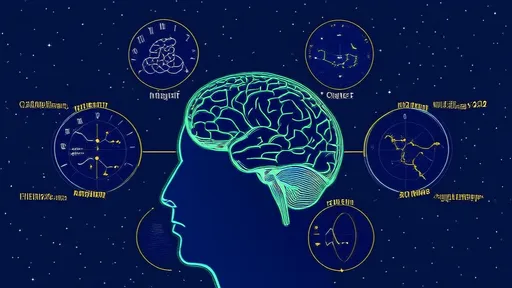
The astrolabe, an ancient instrument of navigation, serves as a powerful metaphor for this process. Just as mariners used it to chart their course by the stars, this modern application seeks to chart the course of executive thought under duress. The 'stars' in this model are the core components of decision-making: risk appetite, analytical depth, emotional regulation, temporal focus (short-term vs. long-term), ethical compass, and adaptability. By mapping these elements, a multi-dimensional profile is created—a unique constellation that defines how a leader perceives and reacts to the world.
The subsequent pressure test is where the theory meets a brutal reality. This phase involves immersing the executive's profile into a series of high-fidelity, worst-case scenario simulations. These are not simple case studies; they are dynamic, evolving crises—a perfect storm of crashing markets, sudden reputational disasters, supply chain collapses, or geopolitical upheavals. The system applies intense pressure to each point of the individual's astrolabe, observing not just the final decision, but the entire journey towards it: the information sought, the questions asked, the doubts entertained, and the ultimate trade-offs made.
The objective is profound. It moves beyond asking, "What did you decide?" to probing the more fundamental questions: "How did you arrive there? What cognitive biases surfaced under pressure? Which part of your astrolabe became your guiding star, and which constellations collapsed under the weight of the crisis?" The results can be illuminating. A leader with a strong analytical star might excel in a data-rich crisis but falter when faced with a purely ethical dilemma with no clear numbers to guide them. Another, guided by a strong risk-appetite star, might navigate a market crash with daring innovation but make catastrophic missteps in a public relations crisis requiring caution and empathy.
Implementing this stress test requires a blend of advanced technology and deep psychological expertise. Behavioral scientists, data analysts, and scenario planners work in concert to build the simulations and interpret the outcomes. The data harvested is rich and nuanced, offering a granular view of decision-making hygiene. It reveals patterns like escalation of commitment to failing courses of action, groupthink tendencies even in solitary decision-making simulations, and the over-reliance on heuristic shortcuts when cognitive load becomes overwhelming.
For corporations, the value proposition is immense. In an era defined by volatility, uncertainty, complexity, and ambiguity (VUCA), the largest risks often reside not in external markets, but in the blind spots of those at the helm. Proactively identifying these vulnerabilities allows for targeted development. Coaching can be focused on strengthening underdeveloped stars—perhaps by enhancing emotional intelligence training or introducing ethical dilemma workshops. It also informs succession planning and team composition, allowing for the assembly of leadership teams where the astrolabes of individual members complement each other, creating a resilient and multifaceted collective decision-making organism.
However, the model is not without its critics and limitations. Some argue that it can never truly replicate the visceral, gut-wrenching pressure of a real-life catastrophe, where personal reputations and livelihoods are instantly on the line. The knowledge that one is in a simulation, however realistic, inherently alters the psychological stakes. There are also significant concerns regarding data privacy and the potential for such a detailed psychographic profile to be misused, either for internal political maneuvering or if it falls into the wrong hands.
Despite these challenges, the Decision-Making Astrolabe Pressure Test represents a significant leap forward in leadership development and risk management. It fosters a culture of self-awareness and preparedness that is invaluable. Executives who undergo the process often report a heightened understanding of their own instincts and a greater capacity for metacognition—thinking about their own thinking—especially in high-pressure moments. It transforms decision-making from an opaque art into a more transparent science, without stripping away the essential human elements of intuition and judgment.
Ultimately, this approach is less about passing a test and more about embarking on a journey of discovery. It is a rigorous process of holding a mirror to the mind of a leader and asking it to reflect under the harshest possible light. The goal is not to find a perfect, unbreakable leader—such a person does not exist. Rather, it is to create a leader who knows their own astrolabe intimately: its strengths, its weaknesses, its biases, and its breaking points. In the relentless turbulence of the modern business world, that self-knowledge may be the most valuable strategic asset any executive can possess.

By /Aug 25, 2025

By /Aug 25, 2025
By /Aug 25, 2025

By /Aug 25, 2025

By /Aug 25, 2025

By /Aug 25, 2025
By /Aug 25, 2025

By /Aug 25, 2025

By /Aug 25, 2025

By /Aug 25, 2025
By /Aug 25, 2025

By /Aug 25, 2025

By /Aug 25, 2025

By /Aug 25, 2025

By /Aug 25, 2025

By /Aug 25, 2025

By /Aug 25, 2025

By /Aug 25, 2025

By /Aug 25, 2025

By /Aug 25, 2025